
Decarbonization: Policies and Practices for Countries and Companies
(VIRTUAL) March– April 2022
Instructors:
Perrine Toledano, Director of Research and Policy at the Columbia Center on Sustainable Investment
Martin Dietrich Brauch, Lead Researcher at the Columbia Center on Sustainable Investment
Description: The Paris Agreement on Climate Change and the 17 Sustainable Development Goals (SDGs) outline a global consensus on the interlinked needs to curb human-induced climate change and to achieve sustainable development. The underlying transitions needed to achieve both the 1.5°C goal of the Paris Agreement and the SDGs include rapid decarbonization of our global economy and a scale-up of new technologies to meet the needs of a growing and modernizing population. The workshop will aim at deciphering what decarbonization means in practice, taking a multi-disciplinary perspective. Participants will learn about the opportunities and challenges of decarbonization embracing different perspectives, from a global level to a country level to a company level. Participants will be exposed to the various disciplines at play in forming the decarbonization agenda and strategies: international law, economics, development and climate policies, technology, finance, and carbon or greenhouse gas accounting.
Learners will walk away with clear ideas on the imperative of decarbonization, the current state of decarbonization, and the measures necessary at all levels to mitigate climate change.
Learning objectives / themes:
- Decarbonization pathways – what does this mean? What are the main agreements the world signed onto that form the decarbonization agenda? What does the International Energy Agency (IEA) tell us about the pathways? Will it be costly? Will the world be better off? Are there sectors that are difficult to decarbonize? What promises technologies hold for us? What are the risks of relying on offsets? Should developing countries, the least responsible for the climate crisis, decarbonize too?
- How to make, measure, and monitor progress? What are the global trends in carbon pricing? Does the world have the right tools to measure progress? Is there a problem with greenhouse gas or carbon accounting? What are the disclosure requirements on climate? Do they help monitoring, decision making, and enforcement?
- Can the force of global governance and international law be leveraged to make progress? Why is the international legal framework relevant for the climate change agenda? Under its current form, is it an enabler of decarbonization, or a barrier? What reforms are necessary to ensure that global governance is effective in supporting decarbonization?
- Decarbonization in practice: Taking the example of one country, Paraguay, and two economic sectors, mining and petroleum, we will look at current practices, challenges, and opportunities when it comes to decarbonization.
Who this workshop is intended for: Participants should have a basic understanding of the world’s global agenda on climate change and the SDGs. This workshop is intended for individuals who have an interest in policies and practices enabling climate change mitigation, and are looking to gain a greater understanding of the implications of decarbonization on energy systems, economic development policies, and two sectors in particular, oil and gas, and mining. Learners will walk away with core competencies including foundations of decarbonization policies, enabling technologies, and opportunities and challenges of implementation from the perspectives of governments and companies. The workshop will be accessible to learners from different backgrounds with basic understanding of the urgency to take climate action.
Learning modalities: This workshop will be offered in a virtual format via Zoom. It will feature of mix of lectures, discussion, and audio/visual materials. Guest speakers will share their practical knowledge and experience as well.
Please note that all courses are taught in English. Proficiency in written and spoken English is required.
Schedule: VIRTUAL March– April 2022.
Session 1: Wednesday, March 9, 5.30-8.00pm ET
Session 2: Wednesday, March 16, 5.30-8.00pm ET
Session 3: Wednesday, March 23, 5.30-8.00pm ET
Session 4: Sunday, March 27, 9.00-11.30pm ET
Session 5: Sunday, April 3, 9.00-11.30pm ET
Session 6: Sunday, April 10, 9.00-11.30pm ET
Instructor bios:
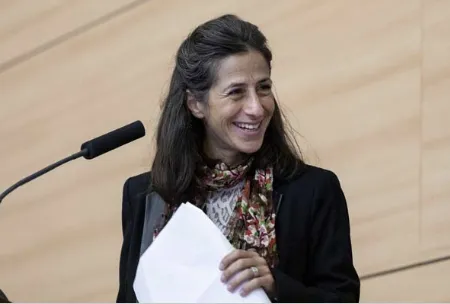
Perrine Toledano is a distinguished research expert in climate and sustainability issues affecting resource-rich developing countries. Mission-driven and forward-thinking, she has played a significant part in developing the expertise, resilience, and visibility of CCSI. Through her entrepreneurial drive and ability to read the market, she has helped the Center grow the number of workstreams, conduct pioneering research in new areas, and influence the wider community of practice.
As Director of Research and Policy at CCSI, Perrine oversees the development of a coordinated, integrated, and impactful program of research across CCSI's thematic areas of interest. She also directs the Center’s work on Mining, Energy, and Climate Finance. She leads research, training, and advisory projects on economy-wide decarbonization pathways and the role of key actors in the energy transition. She has led projects in DRC, Liberia, Paraguay, Mozambique, Sierra Leone, Tanzania, and Timor-Leste, and assisted many more government teams remotely.
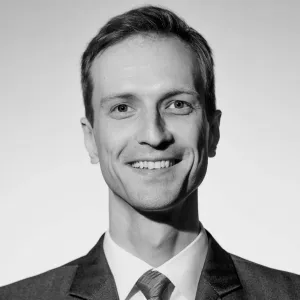
Martin Dietrich Brauch is a Lead Researcher at CCSI. He leads economic and legal research, training, and advisory work, with a focus on legal and policy frameworks and practices for sustainable investment to achieve climate change mitigation and adaptation goals—including through decarbonization and a just transition to net-zero emission energy systems and economies—along with other SDGs. His work centers on the following focus areas at CCSI: Climate Change, Energy Transition, Extractive Industries, and Investment Law & Policy.
He has worked extensively with developing countries in Africa, Asia, Latin America, and the Caribbean, speaking English, French, Portuguese, and Spanish. Prior to joining CCSI, he worked as international law advisor at a global think tank, in-house counsel at a media conglomerate, and associate attorney at a boutique law firm. As a graduate student, he undertook a legal internship at United Nations Climate Change. He received a B.A. in Economics, a Bachelor of Laws, and a specialization certificate in Environmental Law from the Federal University of Pelotas, Brazil. He holds an LL.M. in International Legal Studies from NYU School of Law, where he was an IILJ International Law Fellow.