
Climate Foundations
(VIRTUAL) Spring 2021
Instructors:
Lisa Goddard, International Research Institute for Climate & Society
Simon Mason, International Research Institute for Climate and Society (IRI), Columbia Climate School
Description:
Weather and climate can vary in ways that affect society on timescales ranging from minutes to decades, and over distances from meters to thousands of kilometers. Most people are familiar with daily weather forecasts; many also know about, and may even use, information about future climate change. But what about everything in between? How do we understand the existence of an unusually cold winter in the midst of global warming? Does the climate affect the weather? And, what even IS the difference between weather and climate?
This workshop will allow learners to develop climate literacy. The workshop will introduce the terminology needed to navigate current climate events, debates, and scientific papers. It will provide a physical description of how our climate system works, why it varies, and what we know about its ever-changing state. Participants will become familiar with observational datasets used to understand past climate and monitor the present. Exercises will allow participants to explore broader concepts in the context of their specific geography of interest. The workshop will conclude with a discussion of climate models and how they are used to predict the future – from hours to decades in advance.
Workshop participants will become climate literate, develop awareness about the sources of information about climate, understand the limitations of such information, and comment and think critically about climate topics whether in the news or in personal interactions.
Learning Outcomes:
- Increase knowledge of how the climate system works and why it varies
- Develop an ability to view and interpret maps of weather and climate variables, like temperature, precipitation, pressure
- Learn the differences between short-term weather or climate forecasts and long-term climate projections
Schedule:
Session 1: Tuesday, March 9 – Introductory Session and Course Walk-Through (*6:00pm – 7:00pm ET)
Session 2: Tuesday, March 16 – Mean climate I: Definitions and the global perspective
Session 3: Tuesday, March 23 – Data & Tools: used to understand and monitor weather and climate
Session 4: Tuesday, March 30 – Mean climate II: How it works regionally
Session 5: Tuesday, April 6 – Variable climate: timescales of months to years
Session 6: Tuesday, April 13 – Changing climate II (decades-to-centuries): Natural factors
Session 7: Tuesday, April 20 – Changing climate II (decades-to-centuries): The human factor
Session 8: Tuesday, April 27 – Predications and projections (hours to centuries)
Office Hours: By Appointment
Instructor bios:
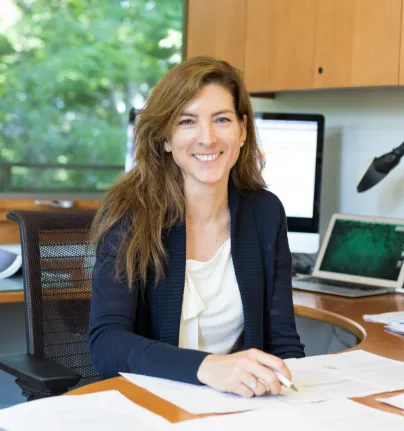
Lisa Goddard was a senior research scientist of the International Research Institute for Climate and Society and an adjunct associate professor within the Department of Earth and Environmental Sciences of Columbia University. She has been involved in El Nino and climate forecasting research and operations since the mid 1990s. She has extensive experience in forecasting methodology and has published papers on El Nino, seasonal and decadal climate forecasting and verification, and probabilistic climate change projections.
Most of Goddard’s research focuses on diagnosing and extracting meaningful information from climate models and available observations. She has served on climate advisory boards for the National Academy of Sciences, NOAA, and the World Climate Research Programme, among others.

Simon Mason has been involved in seasonal climate forecasting research and operations since the early 1990s. He has been heavily involved in training National Meteorological Services in forecasting and climate services. He leads the development and support of software - the Climate Predictability Tool (CPT) - used by many countries to generate forecasts for the coming few months.
Mason has worked closely with various user groups, most notably in the health and disaster communities. Through these collaborations he has recently co-authored a book on climate information for public health action, and has worked with the Red Cross Crescent Climate Center to identify the potential for use of seasonal and weather forecasts for humanitarian action.
Mason works closely with the World Meteorological Organization (WMO) in capacity building initiatives and in the development of policy guidance, including in the establishment of the Global Framework for Climate Services (GFCS). He was presented with an Outstanding Service Award in 2018 for his contributions to the WMO's work in climatology. This award is issued once every four years.
Mason's primary areas of research include evaluating the quality of forecasts, and techniques for improving climate analyses and forecasting.