
Strategic Climate Communications to Effect Change
(Online) July - September 2025
Instructors: Dr. Josh DeVincenzo, Assistant Director for Education and Training and Adjunct Professor at the National Center for Disaster and Preparedness, Columbia Climate School
Description:
There is no question that better climate communications have become a priority across sectors as the impacts of climate change continue to shift daily lives for individuals, communities, and organizations. Whether it be exploring more effective ways to communicate science, navigating difficult conversations stemming from different viewpoints, or connecting better with individuals and groups in a changing world, at the center of climate communication is the convergence of science and the dynamics of human behavior. This workshop invites participants to explore ways to apply research across psychology, adult learning theory, cognitive science, and social neuroscience to improve climate change communications to drive change in their specific context.
This workshop is designed for professionals and interested individuals across sectors who are tasked with communicating climate change-related information in a range of settings, from workplace, activism, classrooms, to everyday encounters. Every context and audience are unique, for that reason, this workshop will focus on working with participants to tailor climate communications and initiatives specific to their work, research, or teaching context. The workshop will be a combination of presentations, guest lectures from the field, and applied practice. Participants will also create a practicum project that will allow them to generate localized solutions and communication strategies for the community/setting of their choice with feedback from experts from Columbia Climate School.
Learning objectives / themes:
- Decarbonization pathways – what does this mean? What are the main agreements the world signed onto that form the decarbonization agenda? What does the International Energy Agency (IEA) tell us about the pathways? Will it be costly? Will the world be better off? Are there sectors that are difficult to decarbonize? What promises do technologies hold for us? What are the risks of relying on offsets? Should developing countries, the least responsible for the climate crisis, decarbonize too?
- How to make, measure, and monitor progress? What are the global trends in carbon pricing? Does the world have the right tools to measure progress? Is there a problem with greenhouse gas or carbon accounting? What are the disclosure requirements on climate? Do they help monitoring, decision making, and enforcement?
- Can the force of global governance and international law be leveraged to make progress? Why is the international legal framework relevant for the climate change agenda? Under its current form, is it an enabler of decarbonization, or a barrier? What reforms are necessary to ensure that global governance is effective in supporting decarbonization?
- Decarbonization in practice: Taking the example of one country, Paraguay, and three economic sectors—critical minerals value chains, heavy industry, and, to a lesser extent, oil & gas—we will look at current practices, challenges, and opportunities when it comes to decarbonization.
Who this workshop is intended for: Participants should have a basic understanding of the world’s global agenda on climate change and the SDGs. This workshop is intended for individuals who have an interest in policies and practices enabling climate change mitigation, and are looking to gain a greater understanding of the implications of decarbonization on energy systems, economic development policies, and three sectors in particular: critical minerals value chains, heavy industry, and, to a lesser extent, oil & gas. Learners will walk away with core competencies including foundations of decarbonization policies, enabling technologies, and opportunities and challenges of implementation from the perspectives of governments and companies. The workshop will be accessible to learners from different backgrounds with basic understanding of the urgency to take climate action.
Learning Objectives/Themes:
- Investigate research across psychology, adult learning theory, cognitive science, and social neuroscience relevant to climate communications
- Analyze and apply systems thinking for climate change
- Identify and generate alternative climate communications to address cognitive barriers to climate-related information
- Review methods of conducting an audience-based need analysis for climate change information
- Explore quantitative and qualitative methods for evaluating the effectiveness of climate communications
- Conduct case study analysis on first-hand climate experiences
- Discuss issues of accessibility and equity in climate communications
- Investigate mental model theory for climate thinking to decode perspectives
- Apply behavioral science principles to understanding individual and collective decision-making
- Identify ways to apply social and emotional intelligence in climate communications
- Evaluate and design data visualization techniques for climate communications
Who is the workshop for:
The workshop is intended for communication and media specialists, other professionals, and students interested in applying climate communications in a variety of settings. The workshop provides the knowledge, skills, and tools for seasoned and new climate communicators to take a deep dive into their current work by applying behavioral science to their projects. The workshop is designed for learners from all different academic and professional backgrounds and interests, as we will take an interdisciplinary approach to develop solutions.
Learning Modalities:
This workshop will be offered in a virtual format using zoom. It will feature a mix of lectures, discussions, and audio/visual materials. Please note that all courses are taught in English. Proficiency in written and spoken English is required.
Schedule:
(VIRTUAL) July - September 2025, Thursdays. Session 1 will be 2 hours in length. All other sessions will run for 2 hours and 10 minutes.
Session 1: Thursday, July 31, 2025, 6-8pm ET
Session 2: Thursday, August 7, 2025, 5.50-8pm ET
Session 3: Thursday, August 14, 2025, 5.50-8pm ET
Session 4: Thursday, August 21, 2025, 5.50-8pm ET
Session 5: Thursday, August 28, 2025, 5.50-8pm ET
Session 6: Thursday, September 4, 2025, 5.50-8pm ET
Session 7: Thursday, September 11, 2025, 5.50-8pm ET
Instructor Bio:
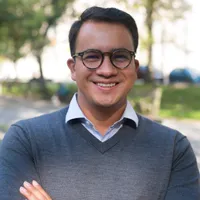
Dr. Josh DeVincenzo is the Assistant Director for Education and Training and Adjunct Assistant Professor at the National Center for Disaster Preparedness, Columbia Climate School, Columbia University. He received his doctorate from Columbia University Teachers College with his dissertation on "Enhancing Capacity in Adult Climate Literacy: Investigating Sustainability Mindsets in the U.S. Emergency Management Profession."
Dr. DeVincenzo focuses on developing learning experiences associated with FEMA training projects that navigate housing, economic recovery, mass care and sheltering, pandemic planning, and climate literacy. He has developed instructor-led and web-based curricula regarding financial literacy, economic impact analysis, and community partnerships.
He hopes to create accessible and quality educational programming that benefits the common good at scale through behavioral science. He holds a master’s degree in Education Policy, Organization, and Leadership from the University of Illinois at Urbana–Champaign and a Doctorate in Education from Teachers College, Columbia University, focusing on Adult Learning and Cognitive Science. He has published his work on climate pedagogy and cognition in esteemed journals and outlets such as the Journal of International Affairs, Routledge, State of Planet, and The Hill.