
UN Climate Negotiations: Why is a Deal so Elusive?
(VIRTUAL) Fall 2020
Instructors:
John Furlow, International Research Institute for Climate and Society (IRI)
Elisabeth Ilboudo Nébié, International Research Institute for Climate and Society (IRI)
Description:
The impacts of a changing climate are increasingly affecting communities and economies across the planet. Scientists warn about irreversible catastrophic impacts if action is not taken to rapidly reduce carbon emissions. But, actions to cut emissions will have significant effects on how we generate and use energy, how we grow food, and virtually every other aspect of our lives.
Since 1992, the climate negotiations facilitated by the United Nations Framework Convention on Climate Change (UNFCCC) have been the world’s approach to planning and coordinating actions to address the risks of climate change.
The UNFCCC is a treaty signed by almost all countries, committing them to take actions to reduce emissions and adapt to the consequences of the changes. Decisions from the UNFCCC have the potential to reshape the global economy and environment, but how does this process work? If the science is clear, why is agreement so difficult? What has it achieved so far? Is it sufficient?
Workshop participants will learn about and discuss major topics debated at key negotiation sessions, landmark negotiations (e.g. Kyoto, Copenhagen, and Paris) and their impacts, what has succeeded and failed at these negotiations and what is left to do. By the end of this workshop, participants will have a strong understanding of the importance of global climate negotiations and will be able to analyze how possible climate deals could affect their own personal or professional interests.
This training will guide a participant through the practical and technical concepts needed to understand the climate negotiations and their implications for society and the economy:
- Component 1: History and overview of the UNFCCC and key meetings; key actors; challenges to reaching agreement
- Component 2: Detailed discussion of key issues: mitigation (reducing carbon in the atmosphere); Adaptation (dealing with the impacts of climate change); Loss and Damage; and finance to turn commitments into action
- Component 3: Influences and culture at the COP. What are the roles of business, civil society, and other interest groups? What does it feel like to be at a COP? How can you get involved?
Schedule:
Session 1: Tuesday, November 3rd, 6:00-6:30 pm, Introduction and course overview
Session 2: Thursday, November 5th, 6:00-8:00 pm, A tour of major twists and turns of the UNFCCC: Rio to Paris, via Kyoto and Copenhagen
Session 3: Tuesday, November 10th, 6:00-8:00 pm, The UNFCCC: Who is it, what is it, and how does it work?
Session 4: Thursday, November 12th, 6:00-8:00 pm, Mitigation: Managing the source of the problem
Session 5: Tuesday, November 17th, 6:00-8:00 pm, Adaptation: Managing the consequences of the problem
Session 6: Thursday, November 19th, 6:00-8:00 pm, Loss and Damage: What do we do about what we can’t manage? Finance: Paying for all the commitments
Session 7: Tuesday, November 24th, 6:00-8:00 pm, Major non-country actors: How do business, civil society, environmental, and research groups influence the negotiations?
Session 8: Tuesday, December 1st, 6:00-8:00 pm, Looking forward from Paris: What remains to be done to fulfill the commitments of Paris? What are the obstacles? Should we be hopeful?
Who is this training for?
This training is for people who want to learn how the climate negotiations might influence their work or their lives, from hedge fund managers to advocates for indigenous peoples’ rights or the environment. It is for anyone who might want to attend a COP or work with a group that tries to influence the negotiations. It is not intended for experienced negotiators.
Instructor bios:
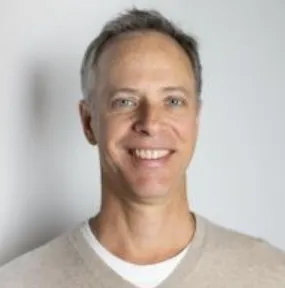
John Furlow is the former Director of the International Research Institute for Climate and Society. He previously led the Climate Change Adaptation Program in USAID’s climate change office. He helped researchers apply their research and expertise to decision making in public health, agriculture, infrastructure planning, and other vital sectors.
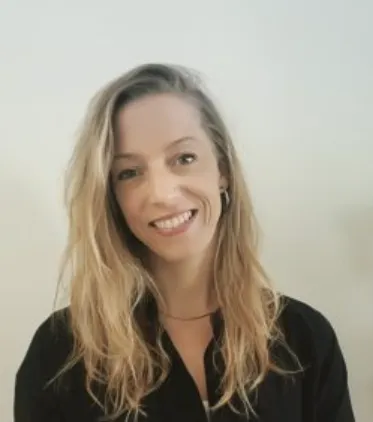
Melody Braun is a former Senior Staff Associate II for the International Research Institute for Climate and Society (IRI) at Columbia Climate School.
There are three components to Mélody’s work: project implementation around climate adaptation, capacity building and executive education, and climate outreach and knowledge sharing. “My work for IRI, which is still the biggest portion of my time, involves working with scientists, decision-makers in affected sectors, and policy makers to improve anticipation, adaptation, and resilience to climate change.”
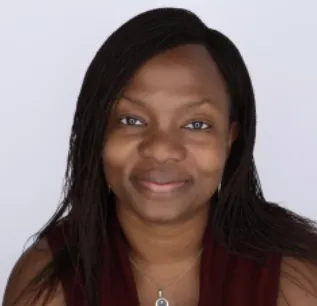
As a human ecologist, Elisabeth Ilboudo Nébié looks at the impact of the environment on people. Also, how people are adapting to environmental change. After graduating with a master’s in international development and social change, Ilboudo Nébié observed that one of the reasons why development projects have failed in the past was because they didn’t take the time to work closely with local communities.
After completing her Ph.D., she won a competitive Earth Institute post-doctoral fellowship to study food security trends, environmental changes, the drivers of human migration, and climate services for pastoral communities in West Africa. She recently completed this research at Columbia University’s International Research Institute for Climate and Society (IRI), and now works as an Assistant Professor at Arizona State University.