
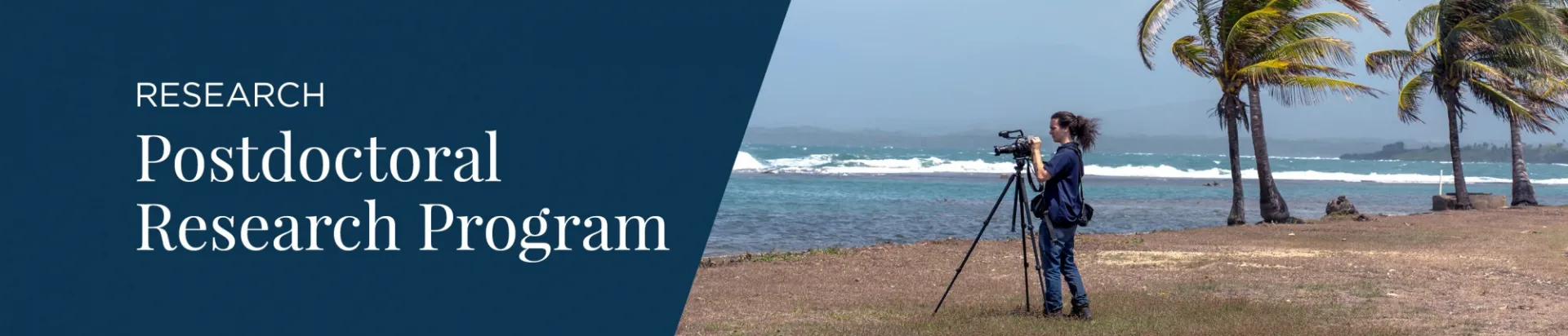
"This postdoc program was one of the most important steps in building my career, providing exactly the foundation I needed for future success. I had incredible opportunities to pursue research grants for climate-related studies and collaborate with world-class scientists in hydrology, geochemistry, social science, and law from inside Columbia and beyond. The program gave me flexibility to conduct independent and collaborative research and publish with exceptional co-authors."
Program and Application Details
Overview
Through the Climate School Postdoctoral Research program, Columbia University’s Climate School supports the scholarship needed to tackle climate change and its related global challenges. The Climate School works to offer solutions through transdisciplinary research, partnerships, education, innovative technology, building knowledge, and the sharing of ideas.
The Climate School Postdoctoral Research program is the premier program in the world for those dedicated to a better understanding of critical scientific and social issues in Climate as well as in global sustainable development. Climate School Postdoctoral Researchers will join multidisciplinary teams of outstanding, committed scientists to advance our scientific understanding of these challenges and develop practical responses to address them.
Successful postdoctoral candidates are matched with Principal Investigators and mentors from across the Climate School, including the Climate School’s research centers and programs, the Lamont-Doherty’s Earth Observatory, Columbia University Medical Center, and other affiliated schools and departments.
The program provides innovative postdoctoral scholars with the opportunity to build a foundation in one of the core disciplines represented within the Climate School (sustainability, the environment, social justice, and the geosciences), while at the same time acquiring the breadth of cross-disciplinary expertise needed to address critical issues related to sustainable development. Specific areas of research include carbon neutral economy, adapting to future climate, earth fundamentals, resilient ecosystems, climate, and social systems, and climate justice and equity. The program offers a unique intellectual surrounding that fosters cross-disciplinary interaction, research, and education.
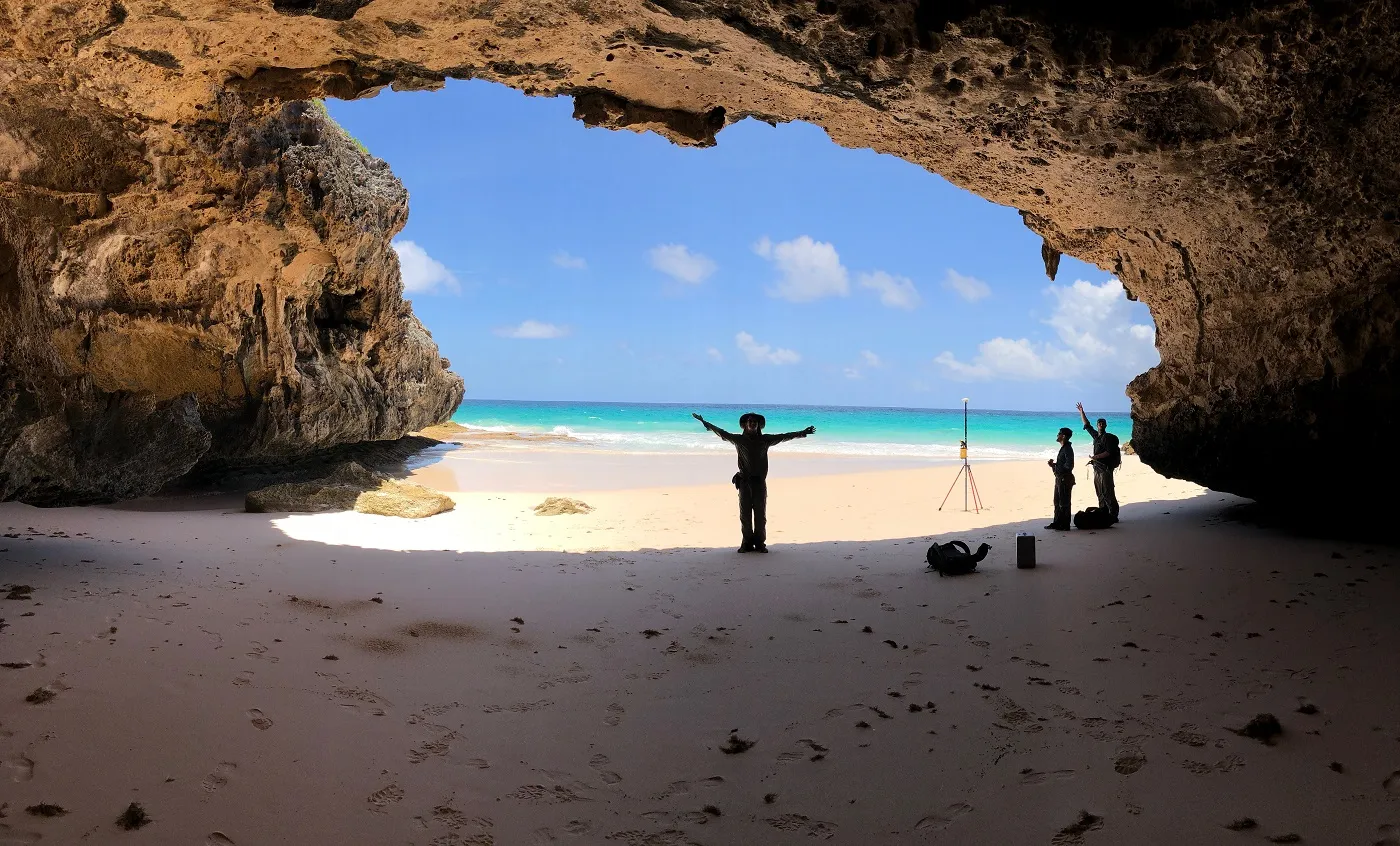
To apply, candidates must complete the online application and submit a proposal for research that would contribute to the goal of global sustainable development. Proposals may suggest participating in, contributing to, or extending existing multidisciplinary Climate School projects. Candidates are also encouraged to develop new, innovative projects that connect Climate School expertise. In addition to submitting the application and proposal, candidates are encouraged to identify and contact their desired multidisciplinary mentoring team, i.e., two or more senior faculty members or research scientists/scholars at Columbia University with whom they would like to work during their appointment.
We encourage research proposals for topics from all areas of climate and sustainable development, with a particular interest in the following Climate School’s foundational knowledge areas:
Earth Systems and Sustainability
Scientific understanding underpins evidence-based solutions to climate variability and change, and other related sustainability challenges such as biodiversity loss and environmental contamination. This pillar includes the foundational understanding of past, current, and future climate, along with connected systems including the oceans, biosphere, atmosphere and lithosphere, and anthroposphere. This pillar captures, for example, discoveries and advances in our understanding of feedbacks, tipping points, and extreme events within and across systems. It also provides a basis for the development, provision, and co-production of climate and other environmental information (including predictions and projections) that is reliable, actionable, usable, understandable, and equitably accessible to all. This pillar also includes foundational knowledge that underpins solutions for the energy transition, carbon removal from the atmosphere, and nature-based solutions.
Social Systems and Justice
This pillar is a home for understanding how social systems operate, including the role of historical legacies in shaping injustice and the climate/environmental crisis, as well as how societies have transformed in the past and could transform in the future. Focus areas include enhancing well-being and livelihood, climate finance, reducing poverty and promoting peace and inclusive participation in governance, and international development. Research and education in this pillar focus on context- and scale-appropriate, equitable responses to climate change, the adoption of new technologies, and the transformation of societies toward just and sustainable futures.
Analytics for Action
This pillar describes approaches, methods, and tools for 1) enhancing understanding within and across the other two pillars, and 2) building to large-scale action and impact. This pillar includes development of the core data sets and models used to understand and predict climate variability and change, as well as climate impacts and solutions. Innovative techniques include Data Sciences and Artificial Intelligence. Methods that enhance co-production of knowledge with diverse communities outside the university build fundamental knowledge while bridging towards action and impact based on local contexts and on broad collaborations. Monitoring and evaluation of the impact of climate actions are also essential to the iterative learning and implementation processes that can lead to transformation.
Questions? Email [email protected].
The Lamont-Doherty Earth Observatory (LDEO) also awards postdoctoral fellowships in the earth, environmental, and ocean sciences. Please visit the LDEO Postdoctoral Fellowship page for more information.
Program Details
Start Date and Duration: Climate School Postdocs are appointed for twelve months with a possible extension of twelve more months, contingent on funding. Appointments typically begin on September 1; however, depending on individual circumstances, as well as the needs of a postdoc’s host research unit, appointments may begin as early as July 1.
Application Opens: Wednesday, September 2, 2026
Application Deadline: Friday, October 30, 2026, by 11:59 pm Eastern Time
Funding: Climate School Postdocs will receive an annual salary of $72,116. They are also awarded a research stipend of $7,000 for reimbursable expenses related to the appointment. These funds can be used for relocation and moving expenses, as well as for computers, travel, conference, journal, book, software, equipment, and other research costs.
External Funding: CCS Postdocs are encouraged to participate in the development and submission of research proposals in cooperation with their mentors, host research units, or other researchers. When doing so, they must follow all Columbia University rules applicable to postdoctoral scholars.
Visas: Columbia University only grants limited-term J1 visas for non-US citizens. Read more information on Columbia’s visa eligibility policies online.
Benefits: CCS Postdocs are considered Officers of Research and are eligible for benefits provided by Columbia University for full-time employees. For more information, please visit Columbia's Office of Human Resources online. The rules, regulations, and policies that govern employment at Columbia are also listed on the website.
Orientation: A series of information sessions and visits to Climate School research units.
Spring and Fall Symposia: Two public symposia per year in which both first-year and second-year postdocs present their research and participate in discussions with the audience. The symposia provided a great opportunity for postdocs to engage the Columbia research community as well as the larger public in innovative research in sustainable development.
Postdoctoral Seminars: A seminar series in which each postdoc presents her or his ongoing research. Visiting speakers also participate in the seminars. Postdocs may also coordinate group projects that are designed, discussed, and implemented during these times. The meetings are informal and designed to foster interdisciplinary and problem-solving discussions among CCS Postdocs, faculty, and researchers. Lunch is provided.
Other Climate School Seminar Series: Climate School Postdocs receive invitations to other events and speaker series at Columbia, including those sponsored by the Climate School's Lamont-Doherty Earth Observatory (LDEO), Goddard Institute for Space Studies (GISS), Center for Environmental Research and Conservation (CERC), Earth Engineering Center (EEC), and the Center for International Earth Science Information Network (CIESIN).
Questions? Email [email protected]
Application Guidelines
Eligibility
To be eligible for the program, candidates must have received their doctoral degrees (Ph.D., M.D. or J.D.) within three years prior to the start of the appointment. All doctoral requirements must be fulfilled and the degree awarded before the start of the appointment. People holding current positions with rank above post-doctoral scientist are not eligible for appointment under university rules. Those holding current post-doc positions should contact our office to determine eligibility. The program is open to U.S. and non-U.S. citizens. Columbia University is an affirmative action/equal opportunity employer. Minorities and women are encouraged to apply.
Application
Deadline: Friday, October 30, 2026 by 11:59 pm Eastern Time
To apply to the program candidates must submit the following documents:
- Online Application
- Curriculum Vitae
- Brief Personal History
- Research Proposal
- 3 Recommendation Letters
In addition to submitting the application and proposal, applicants are encouraged to contact their desired multidisciplinary mentoring team, i.e. two or more senior faculty members or research scientists/scholars at Columbia University with whom they would like to work during their appointment. Please note that an endorsement from a faculty member or researcher does not guarantee acceptance into the program.
Brief Personal History Format
Two (2) page maximum, double-spaced; one-inch margins, minimum 11 point standard font. The personal statement should include the following elements based on their relevance to your situation
- Brief personal introduction and research statement.
- Paragraph in your personal statement that addresses the Climate School’s mission.
- Summary of any discussions you have had with potential mentors. Note: endorsement from a faculty member or researcher does not guarantee acceptance into the program.
- Explanation of gaps in employment or studies (these will be considered on a case-by-case basis).
- Prior postdoctoral positions - Columbia University policy only allows a cumulative maximum of 5 years in a postdoctoral position, whether held at or outside of the university. If you have prior postdoc experience, please email us at [email protected] to discuss your application.
Recommendation Letters
Three (3) recommendation letters are required by Friday, October 30, 2026, 11:59pm Eastern Time. Once an application is successfully submitted, the references listed will receive an email with the Applicant ID and the link to upload their letter. Applicants are strongly encouraged to apply early and to request that their referees send in letters in a timely manner.
Note: We strongly recommend informing your references of the request for a letter in advance of submitting your application. We also recommend following up with your references after you have applied to ensure that they have received the information to upload their letter.
Research Proposal Format
Five (5) page maximum; double-spaced; one-inch margins; minimum 11 point standard font.
Bibliographic references are required but not counted toward the 5-page maximum. They should be included in the same document.
The research proposal should address how the proposed work will contribute to the goal of global sustainable development. Proposals may suggest participating in, contributing to, or extending existing multidisciplinary Climate School projects. Candidates are also encouraged to develop new, innovative projects that connect Climate School expertise. You must include a title for your research proposal.
Research Foci and Mentors
Research foci are determined by the postdocs themselves. Thus, Climate School Postdocs play an active, independent role in developing their own areas of expertise and research agendas. Candidates are encouraged to review the list of the Climate School's research units and relevant Columbia University departments to see the breadth of potential mentors and collaborators actively engaged in research at the university.
Candidates are strongly encouraged to identify and contact a mentor prior to applying. Candidates are also encouraged to scope additional members of the Columbia Climate School who hold the rank of Assistant Professor / Research Scientist or higher.
Selection Procedure
Applications are reviewed by the Climate School Postdoctoral Selection Committee, which is composed of senior Climate School faculty from across the School. Care is taken to ensure that all of the Climate School's core disciplines are represented in the Committee.
An initial, rigorous review of the applications examines several factors, including the following:
- Strength of the research proposal
- Relevance to the Climate School's mission and research themes
- Interdisciplinary and collaborative potential
- Practice/policy/community engagement relevance
- Previous academic experience
- Strength of academic/professional references
Applications that merit further consideration are moved forward to the directors of one or more relevant Climate School research units. Based on feedback received from the research units, the Selection Committee reevaluates the applications in great detail before reaching a final decision.
Decisions
Appointments will be announced by April 2027.
Climate School’s mission
The mission of the Columbia Climate School is “to further knowledge and educate leaders to achieve equitable and just solutions to the changing climate and related sustainability challenges.”
Please include a paragraph in your personal statement that addresses the Climate School’s mission. Applicants should explain how their research and experience exemplify or advance this mission and include specific examples from their academic pursuits and accomplishments. We particularly value work that is attentive to the distinct needs within and among communities and contributes meaningfully to the public good.
News
New Report: Ocean Carbon Removal Shows Promise, But Big Questions Remain
Marine carbon dioxide removal could support climate action but faces major scientific, technical and governance challenges, according to a National Academies of Sciences, Engineering, and Medicine report.
Empowering the Next Generation of Climate Leaders in the Green Mountains
Columbia Climate School in the Green Mountains is a two-week campus-based program in Vermont for high school students to mobilize action, drive impact and effect change in response to our warming planet. The summer 2026 program welcomed 58 students from the United States, China, Hong Kong, Thailand, Singapore and the U.K. for an impactful, exciting and enriching experience.
This Stanley Park Fellow Is Studying Climate Finance To Help Guide Chile’s Energy Transition
M.S. in Climate Finance student Martín Urrutia Illanes combines engineering, renewable energy development and financial analysis to address Chile’s climate challenges.
Events
Disaster Readiness Summit with NCDP
Gotham Foundry Symposium: Regenerative Materials Across Industries
Making Critical Mineral Recovery Bankable And Insurable
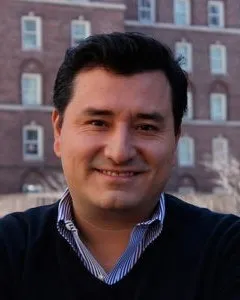
Our Postdocs
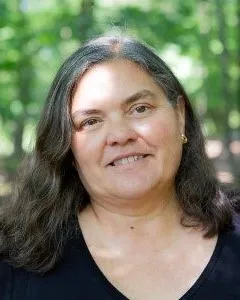
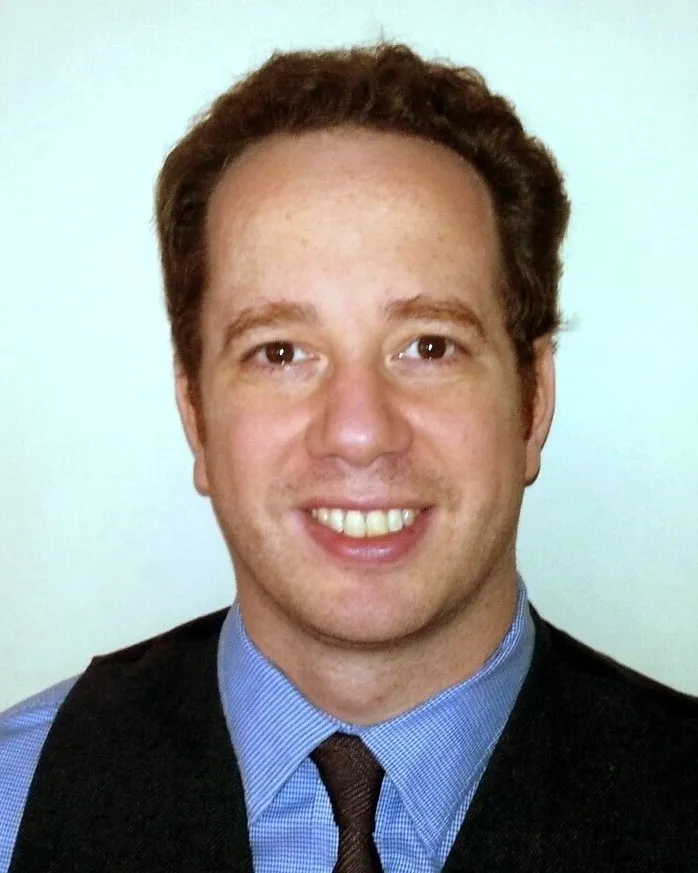
2026-2028 Cohort
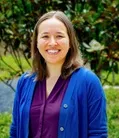
Maya Chung
Maya Chung is a climate scientist studying the connections between climate and human health. At the Columbia Climate School, she works with Dr. Jeffrey Shaman and Dr. Sen Pei to investigate how extreme rainfall influences infectious disease outbreaks and how these risks may be shaped by climate change and human behavior. She earned her PhD in Atmospheric and Oceanic Sciences at Princeton University, where she used global climate models to understand drivers of climate variability and change, their impacts on infectious disease dynamics and extreme temperatures, and implications for climate and public health policy.
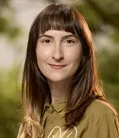
Luísa Genes
Luísa Genes is an ecologist and conservation scientist whose research focuses on biodiversity recovery in tropical forests. Her work has a particular emphasis on the recovery of species interactions and functions across a range of conservation interventions, from natural regeneration to trophic rewilding. As a postdoctoral research scientist at the Columbia Climate School, she will work under the mentorship of Prof. Marcia Macedo to establish a research program that integrates her previous experience on biodiversity loss and recovery with global change science. Specifically, her research will investigate how the interplay between anthropogenic disturbances, climate change, and biodiversity loss shapes functional traits of Amazonian forests and how this will impact forest resilience in the future. Luísa received her PhD in Biology (Ecology and Evolution) from Stanford University in 2026. Beyond her academic work, Luísa serves as Scientific Director of Refauna, a non-profit in her hometown of Rio de Janeiro, Brazil, that conducts science-based species reintroductions in the Atlantic Forest.
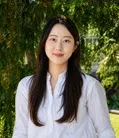
JeongYeon Han
JeongYeon Han is a geologist interested in the evolution of fluvial landscapes under natural and human-driven environmental change. She received her Ph.D. from Indiana University, where her research examined channel–floodplain interactions through numerical modeling and remote sensing analyses. Her work integrates morphodynamic modeling, satellite-based observation, and quantitative geospatial analysis to examine river dynamics and floodplain development across temporal and spatial scales. As a postdoctoral researcher at Columbia Climate School, JeongYeon will study how land use/land cover patterns influence riverside erosion and flood hazards across Eastern North and South America. Working primarily with Dr. Austin Chadwick and Dr. Marcia Macedo, her work aims to support sustainable river management, flood risk reduction, and climate adaptation planning in riparian communities.
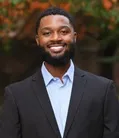
Brandon Lewis
Brandon Lewis is an environmental health scientist whose work advances our understanding of disparate health, environmental sustainability, and social vulnerability issues that impact communities. His passion lies in improving community health and sustainability through the lens of scholarship and centering social justice. He earned his Ph.D. in Environmental Science from Yale University School of the Environment. His dissertation research provides insight into community health and sustainability at different scales by investigating two distinct environmental exposures: impacts of indoor air pollution in Accra, Ghana, and impacts of agricultural farming in North Carolina. He holds a Bachelor of Science in Meteorology and a Master of Science in Atmospheric Science from North Carolina State University. At Columbia’s Climate School, Brandon is exploring data gaps and investigating solutions to the impacts of climate-related extremes on incarcerated people in the United States. His work bridges exposure assessment, geospatial science, and epidemiology to develop studies to better understand the social vulnerabilities and climate susceptibilities of those currently and formally involved in the US carceral system.
2025-2027 Cohort
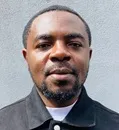
Lovees Lueong
Lovees Lueong is an environmental geographer and climate justice scholar whose work advances inclusive climate finance for vulnerable communities in Central Africa. His research explores how participatory, gamified digital platforms can democratize access to climate funding and amplify the voices of women, smallholder farmers, and forest-dependent groups typically excluded from adaptation planning. At Columbia’s Climate School, Lovees is investigating the Inclusive Design of Gamified Climate Finance Platforms under the mentorship of Professor Daniel Osgood. This work bridges climate science, governance, and equity by developing accessible, culturally sensitive tools that promote transparency, local governance, and community-led adaptation. He holds a Ph.D. in Geography and Planning from the University of Bamenda, where he also served as a graduate teaching assistant. Lovees is a member of the Cameroon Academy of Young Scientists (CAYS). His academic work spans environmental justice, deforestation dynamics, climate governance, and gendered vulnerability. He is a recipient of the Conservation Action Research (CARN) Grant. Lovees is passionate about decolonizing climate knowledge and embedding equity into the architecture of global climate finance.
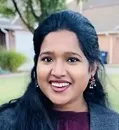
Pavi Selvakumar
Pavi Selvakumar is an environmental social scientist interested in how communities navigate sustainability, environmental justice, and resilience in the face of today’s climate challenges. She earned her Ph.D. in Environmental Science from Oklahoma State University. Her dissertation investigated how institutional structures, campus culture, state politics, and leadership priorities influence the development of sustainability initiatives at U.S. land-grant universities. She holds a bachelor’s degree in Information Technology from India and a master’s degree in Environmental Assessment and Management from the United Kingdom. Her interdisciplinary background drives a research approach that combines technical fluency with a strong foundation in environmental policy and social inquiry. As a postdoctoral researcher at the Columbia Climate School, she contributes to the Resilient Coastal Communities Project (RCCP), exploring how artificial intelligence and community-based modeling can be integrated to support equitable climate adaptation and resilience planning in frontline communities.
2024-2026 Cohort
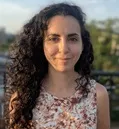
Amel Derras-Chouk
Amel is a physicist who uses satellite data to quantify uncertain cloud properties and develops analytical models to explain them. Although clouds’ importance in, for example, transporting moisture globally or reflecting solar radiation is well understood, clouds make up the largest uncertainties in climate feedback projections. Amel works with Dr. Greg Elsaesser to improve physical models of deep convective anvil clouds, explaining ordered properties that emerge from their complex behavior to reduce feedback uncertainties. With a Ph.D. in condensed matter physics from CUNY Graduate Center, Amel brings an interdisciplinary background to her research, which she has applied to quantifying vertical velocity in deep convective clouds.
2023-2025 Cohort
Shams Azad
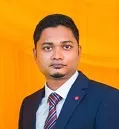
Dr. Shams Azad earned his doctoral degree from New York University, where his research is dedicated to the comprehensive exploration of hazardous pollutant exposure and the discernment of direct and indirect effects of extreme events and conditions with advanced sensing techniques and data-driven methodologies. As a postdoctoral research scientist at the Columbia Climate School, he collaborates closely with Dr. Steven Chillrud on developing high-resolution models pertaining to groundwater metal exposure within the U.S. Northern Plains region. He earned B.S. from the Bangladesh University of Engineering and Technology and M.S. from Stuttgart University of Applied Sciences.
The Columbia Climate School Postdoctoral Research program has provided postdoctoral scholars with the opportunity to engage in cross-disciplinary sustainable development research. Over 120 alumni have completed the postdoctoral program, coming from diverse backgrounds that include law, theology, medicine, science, economics, engineering, ethnomusicology, and anthropology.
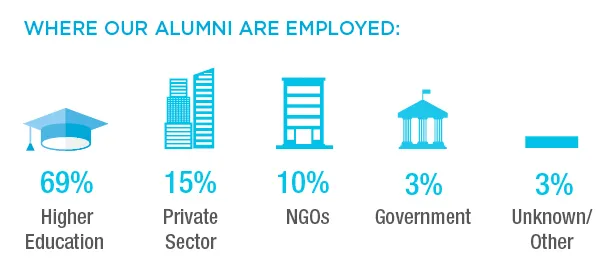
Most alumni go on to pursue careers in higher education and have accepted academic positions at universities such as Columbia University, Indiana University, Oberlin College, and University College London. Others have joined NGOs, government, and the private sector, or started their own companies.
2024-2026 Cohort
Clara Chang
Rebecca Gustine
Sheehan Moore
Ariana Salas Castillo
Kevin Schwarzwald
2023-2025 Cohort
Bianca Carducci
Peterson Faina
Ian Gray
Nicolas Lippolis
Maya Moore
Asya Svirinovsky-Arbeli
Anna-Katharina von Krauland
Andrew Wang
2022-2024 Cohort
Isatis M. Cintron-Rodriguez
Dylan S. Davis
Manuel P. Linsenmeier
Enquye Negash
Kathelyn Paredes Villanueva
Nadia Seeteram
2021-2023 Cohort
Thalia Balkaran
Farideh Hosseini Narouei
Yue Huang
Daniel Green
Leah Jones-Crank
2020-2022 Cohort
Amanda Baxter
Sarah Garland
Festival Godwin Boateng
Arturo Pacheco-Solana
Muye Ru
Cascade Tuholske
2019-2021 Cohort
Ben Bales
Spencer Hill
Robbie Parks
Beth Tellman
Liv Yoon
2018-2020 Cohort
J. Nicolas Hernandez-Aguilera
Weston Anderson
James Jones
Winslow Hansen
Megan Maurer
Elisabeth Nebie
Sha Zhou
2017-2019 Cohort
Allison Bridges
Pilar Fernández
Maron Greenleaf
Anand Osuri
Andy Stock
2016-2018 Cohort
Ruthie Birger
Kyle Davis
Alexandra Karambelas
Milad Kharratzadeh
Ding Ma
Nandini Velho
2015-2017 Cohort
Madison Condon
Robert Elliott
Xiaohui Feng
Justin Mankin
Hannah Nissan
Jeffrey Paller
2014-2016 Cohort
Graeme Blair
Booyuel Kim
Shauna Downs
Martina Kirchberger
W. Victoria Lee
Shira Mitchell
2013-2015 Cohort
Katherine Alfredo
Elliot Cohen
Tanya O’Garra
Aurelie Harou
David Kanter
Ezra Markowitz
Jilian A Sacks
Katya Vasilaky
2012-2014 Cohort
Astrid Dannenberg
Joshua Fisher
Jesse Lasky
Emilie Perge
Tess Russo
Gary Watmough
Leigh Whittinghill
2011-2013 Cohort
Tien Ming Lee
Ying Li
Jaime Madrigano
Nada Petrovic
James Tamerius
Katherine Tully
Shelley Welton
Meng Xu
2010-2012 Cohort
Ana Arjona
Andrew Bell
Sarah Kaschula
Hope Michelson
Alexandra Morel
Daniel Soto
Annika Sweetland
Tara Troy
Derek Willis
2009-2011 Cohort
Shahzeen Attari
Ilana Brito
Chao Chen
Gillian Galford
Jonathan Hickman
Carlos Pérez
2008-2010 Cohort
Stergios Athanassoglou
Sandra Baptista
Liza Comita
Elisabeth King
Chie Sakakibara
Sean Smukler
Leigh Winowiecki
2007-2009 Cohort
Haimanti Bhattacharya
Daven Henze
Cassidy Johnson
Melissa Keeley
Erin Lothes Biviano
Mary Nyasimi
Gretchen Peltier
Kenneth Shirley
2006-2008 Cohort
Alex Awiti
Matthew Bonds
Darby Jack
Florence Kondylis
Brenda Lin
Valerie Mueller
Deborah Salon
Tobias Siegfried
Ulrich Wagner
2005-2007 Cohort
Susan Doll
Vladimir Gil
Rebekah Green
Franco Montalto
Murugi Ndirangu
Michael Reilly
Roland Russell
Christian Webersik
2004-2006 Cohort
Lee Addams
Yanis Ben Amor
Kristina Czuchlewski
Fabrice De Clerck
Christopher Doll
Jane Carter Ingram
Harounan Kazianga
Bijan Khazai
Caroline Korves
Nikhil Krishnan
Cristina Maria Rumbaitis-del Rio
Nori Tarui
2003-2005 Cohort
Susanne Bauer
Mary Booth
Jennifer Cole
Jonathan Donner
Ben Evans
Guillermo Franco
Nobuyuki Hanaki
Kate Jones
Martin Sandbu
Anton Seimon
Yesim Tozan
Jessika Trancik
2002-2004 Cohort
Angela Bednarek
Brian Mailloux
Nicky Sheates
2001-2003 Cohort
Liliana Botcheva-Andonova
Saugata Datta
Tracy Holloway
Lensyl Urbano
2000-2002 Cohort
Peter Dodds
Joe Thornton
1999-2001 Cohort
Zoltan Takacs
Xianzhong Wang