
Climate Conversations: The Role of Effective Communication in Creating Change
(VIRTUAL) Spring 2025
Instructors: Margie Turrin & Marisa Annunziato, Lamont-Doherty Earth Observatory, Columbia Climate School
Live Information Session Attendees will receive 10% Discount Code
Description: Effective communication strategies are an integral piece in creating a well-informed and climate-literate society. With climate change posing an array of challenges globally that includes threats to food security, access to clean drinking water, more frequent and stronger natural disasters, potential housing crises, effective communication on climate is critical. Our climate future is not set, and our actions today matter in creating a brighter future. We all have an important role in generating the change needed to mitigate our climate’s warming, and to adapt to the challenges and impacts already being seen today. The first step in eliciting change is to inform the public about the challenges we face and sharing innovative solutions to climate problems. Knowing the steps to effective communication is an important part of this.
In this workshop we will focus on effective communication strategies to inform different audiences about the climate crisis intended to generate action. We will identify different approaches for communicating climate looking at a variety of media, including the use of social media platforms, games, community engagement via public outreach, and curricula in schools to increase awareness and literacy. Students will be introduced to some Do’s and Don’ts of climate communication, focusing on informing without fearmongering and generating action instead of anxiety. Using the knowledge acquired over the course of the workshop, students will identify which communication strategies are the most effective for reaching their target audiences to elicit measurable change within their communities. The final project for each student will be to generate a framework for climate action plan (CAP), identifying reasonable and manageable changes within their community while identifying effective communication strategies to garner support from stakeholders and community members. The CAP will be introduced early in the workshop so that throughout the workshop the students will be building the pieces for their final project.
Learning Objectives/Themes:
- Gain an understanding of climate impacts and innovative solutions
- Identify different approaches to disseminating information
- Assess the best approaches and practices when communicating climate to diverse audiences
- Be able to effectively communicate about climate change
- Create a climate action plan for your community
- Identify opportunities and stakeholders to generate change within your community
Who is the workshop for: The workshop is intended for high school students interested in gaining a better understanding of how to efficiently and effectively communicate about climate change. Throughout the workshop, the students will increase their knowledge and understanding of different approaches and platforms to communicate climate topics to all ages. After the completion of the workshops, students will have increased their knowledge of climate change and be skilled communicators capable of generating and promoting climate action. The workshop is designed for passionate learners from all academic backgrounds.
Learning Modalities: The series of sessions for this workshop will be offered virtually using Zoom. They will feature a mixture of lectures, and visual materials including audio/videos, and include a significant amount of both discussions and activities.
Please note that all workshops are taught in English. Proficiency in written and spoken English is required.
Schedule: (VIRTUAL) March - May 2025, Saturdays, 10 am-12 pm unless otherwise indicated.
- Session 1: Saturday, March 22nd
- Session 2: Saturday, March 29th
- Session 3: Saturday, April 5th
- Session 4: Saturday, April 12th
- Session 5: Saturday, April 26th
- Session 6: Saturday, May 3rd
- Session 7: Saturday, May 10th (*3 Hour Session: 10-1 pm)
Instructor Bios:
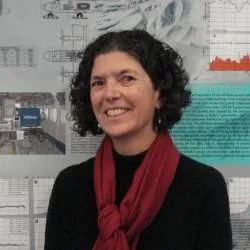
Margie Turrin is Director of Educational Field Programs at Lamont-Doherty Earth Observatory of Columbia Climate School where for the last 25 years she has developed and delivered science education for formal and informal educators, and conducted research linking science and education. She is committed to field-based teaching and research opportunities and teaching Earth as a system. She has participated in multiple field and education programs at the local, national and international levels blending climate research and education to a place-based application. She recognizes the role of youth to bring about change and has focused on empowering them to be the change agents we need.

Marisa Annunziato is the Education Program Assistant at Lamont-Doherty Earth Observatory of Columbia Climate School where she helps to develop environmental education curriculum and outreach materials. She is involved in helping to coordinate and lead formal and informal education opportunities including hands-on field-based learning experiences, research opportunities, and public outreach events. She is passionate about fostering people's connections to and knowledge of local and global environments. Through the various projects she works on, she strives to educate others about the connectivity of Earth's different systems and the impacts climate change will induce.