
Climate Connections: Why We Should ALL Care About the Polar Regions
(VIRTUAL) Spring 2024
Instructors: Margie Turrin & Marisa Annunziato, Lamont-Doherty Earth Observatory, Columbia Climate School
Each online workshop is currently being offered at a rate of $1,599.99 per offering. Information Session Attendees will receive 10% Discount Code
Description: The polar regions are literally off the map, hidden away at the far ends of our Earth and thus often viewed as disconnected and obscure barren landscapes, yet these regions are vital to many natural systems on Earth. Their importance is often overlooked or infrequently discussed and a wealth of misconceptions and mystery surround them, something scientists and educators are working together to try and unravel. They influence global wind and atmospheric patterns, drive large-scale ocean currents and movement, are home to diverse and unique wildlife, and are essential in regulating Earth’s climate, keeping it cool. As the Earth is being warmed by human-induced climate change, our polar regions are experiencing some of the fastest changes on the planet, and provide a stark look at what is possible.
This workshop focuses on understanding the polar regions and their importance in driving and maintaining natural processes on Earth. We will discuss the many reasons we should focus on polar connections, and their far-reaching global impacts. Throughout the workshop, students will dive into understanding the changes that are occurring, the research being done in these regions, and how to become a Polar Climate Ambassador, trained to step up to educate and advocate for change to reduce and mitigate the impacts of climate change. We will focus on developing education and communication pieces that can be shared with both the students’ peers and community. This workshop will expose students to several career pathways and how some scientists found themselves researching the polar regions.
Learning Objectives/Themes:
- Gain insights into why we should include the polar regions when learning about Earth’s climate
- Investigate Earth systems to better understand the many feedbacks that are a natural part of the system, and how these can become out of balance
- Improve data literacy through reviewing a range of methods of sharing data with the public
- Review current research being completed in the polar regions around climate change
- Develop effective climate communication skills and materials
- Create individual and team plans for sharing polar climate communications with different groups
- Become a Polar Climate Ambassador!
Who is the workshop for: The workshop is intended for high school students interested in gaining a better understanding of Earth’s Climate system, and its critical connection to the polar regions. Throughout the workshop students will gain a better understanding of the polar regions, how they are changing, and their importance through a climate change perspective. The workshop will provide students with the knowledge and skills to dissect the ever-present climate crisis while conveying the intricacies of changes in the polar regions and the global impacts these changes will have. After the completion of the workshops, students will have increased their science communication skills, be able to appropriately educate their peers and advocate for change. Learning objectives will be achieved by looking at polar regions and climate change with an interdisciplinary approach. The workshop is designed for passionate learners from all academic backgrounds.
Learning Modalities: The series of sessions for this workshop will be offered virtually using Zoom. It will feature a mixture of lectures, and visual materials including audio/videos, discussions, and activities.
Please note that all workshops are taught in English. Proficiency in written and spoken English is required.
Schedule: (VIRTUAL) Saturdays, 10am - 12pm ET unless otherwise indicated.
- Session 1: Saturday, March 23
- Session 2: Saturday, April 6
- Session 3: Saturday, April 13
- Session 4: Saturday, April 20
- Session 5: Saturday, April 27
- Session 6: Saturday, May 4
- Session 7: Saturday, May 11 (*3 Hour Session: 10-1 pm ET)
Instructor Bios:
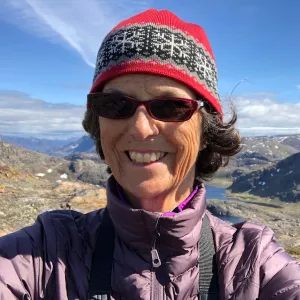
Margie Turrin is Director of Educational Field Programs at Lamont-Doherty Earth Observatory of Columbia Climate School where for the last 25 years she has developed and delivered science education for formal and informal educators, and conducted research linking science and education. She is committed to field based teaching and research opportunities. She has participated in multiple field and education programs in both Greenland and Antarctica on climate research projects, focusing on linking these regions into climate education. Current projects in Greenland focus on collaborations with the local residents, and ensuring that final products are provided to the communities in formats that are useful.

Marisa Annunziato is the Education Program Assistant at Lamont-Doherty Earth Observatory of Columbia Climate School where she helps to develop environmental education curriculum and outreach materials. She is involved in helping to coordinate and lead formal and informal education opportunities including hands-on field-based learning experiences, research opportunities, and public outreach events. She is passionate about fostering people's connections to and knowledge of local and global environments. Through the various projects she works on, she strives to educate others about the connectivity of Earth's different systems and the impacts climate change will induce.