
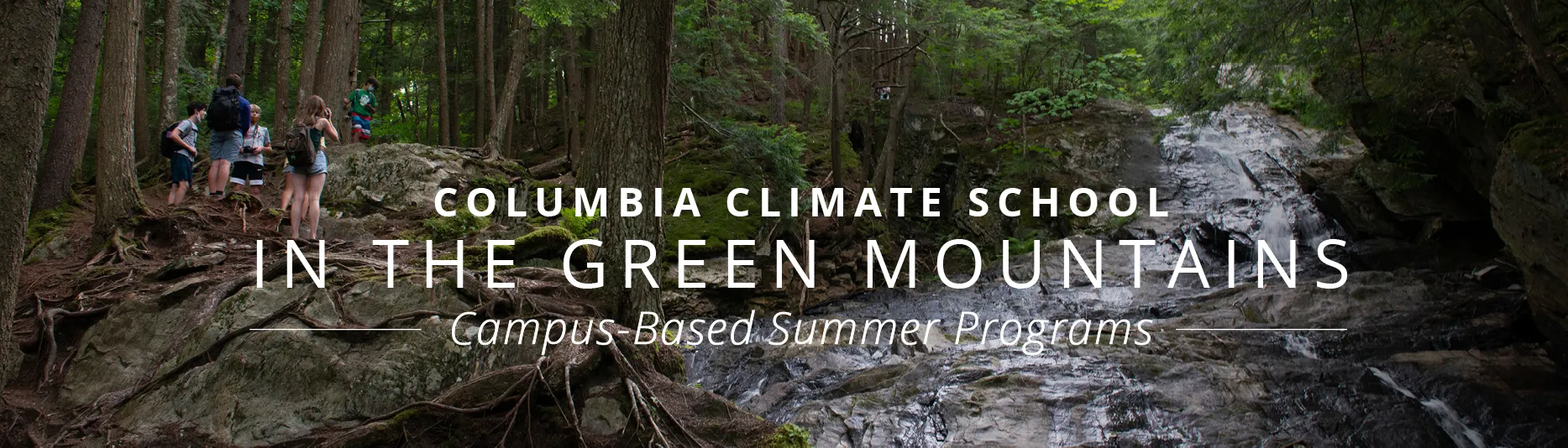
Become an Agent of Change by joining the
Columbia Climate School in the Green Mountains
ABOUT THE PROGRAM
The Columbia Climate School in the Green Mountains, a 2-week campus-based program in Vermont for high school students to mobilize action, drive impact, and effect change in response to our warming planet. Engage with experts from Columbia Climate School and learn about cutting-edge innovations in action. Meet, collaborate, and build partnerships with like-minded students and tap into collective strengths for action.
EMPOWERING YOUTH TO LEAD CLIMATE SOLUTIONS
SUMMER PRE-COLLEGE INFORMATION SESSIONS
Live info sessions have concluded for the upcoming summer 2026 pre-college program.
All the information sessions are recorded and posted on the Columbia Climate School's YouTube channel. Watch our latest session below!
STUDENT EXPERIENCE
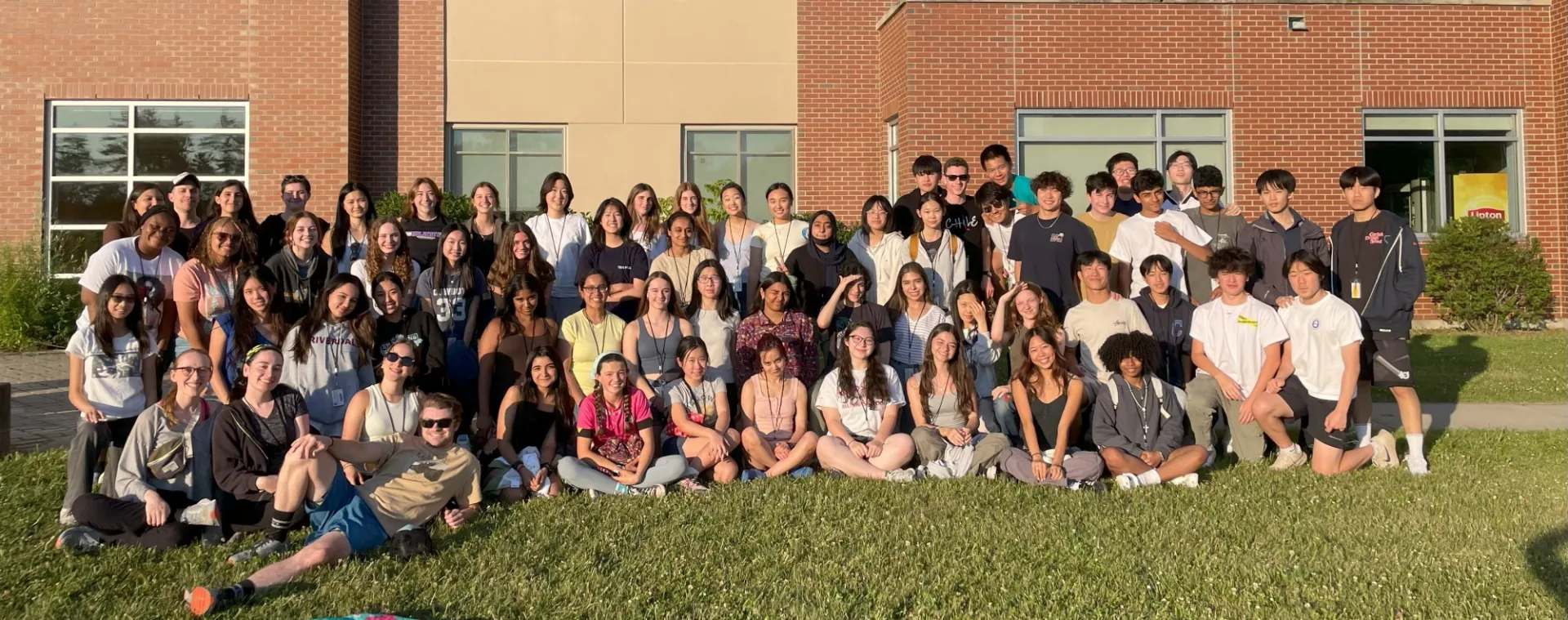
Climate change is one of the most significant challenges of our time, affecting not just the environment but all aspects of society. While its impacts are already being felt, there is immense potential to shape a future that is resilient, just, and sustainable. To achieve this, we must empower the next generation to become leaders and catalysts for change. Elevating the voices of youth—those who will be at the forefront of tomorrow’s solutions—can inspire new perspectives and innovative action.
Youth engagement and active participation are essential for fostering a world where hope translates into progress. Through learning, collaboration, and meaningful conversations, we can turn knowledge into action. This program will equip you with the skills and confidence to make a real difference and be a part of the solution.
The Columbia Climate School in the Green Mountains, hosted at Vermont State University’s campus, offers a two-week immersive experience where high school students can connect, create, and lead. Join us to be inspired, gain tools for action, and take meaningful steps toward a brighter, more sustainable future.
“I gained knowledge about a variety of climate change aspects and solutions, a project which I can implement in my community, and friends who are passionate about the same thing as me.”
A DAY IN THE LIFE OF A GREEN MOUNTAN PARTICIPANT
Day 1
- Arrival and Welcome
Day 2
- Orientation
- Empowering You(th) for Change
- The Science of Climate Change: Primer
- Afternoon activities include Pollinator & Plant Walk or Ultimate Frisbee
Day 3
- The Science of Climate Change: Advanced Session
- CAP Time - Community Assessment and Collective Action
- Macros as a Proxy for Water Quality
- Climate Change Communication & Conversation
- Afternoon activities include: berry picking and baking tarts, Kickball, or attending the Vermont Symphony Orchestra
Day 4
- Tree Coring
- Biome Time
- Proxy Data Analysis
- Excursion to Lake Bomoseen, activities include:
- Biological Survey
- Water Quality
- Turbidity and Coring
- Weather and Site Sketch
- BBQ Dinner at Lake Bomoseen
Day 5
- Climate Modeling & Projection
- Macros as a Proxy for Water Quality
- CAP Time - Community Assessment and Collective Action
- Climate Change in Your Community
- Afternoon Activities
Day 6
- Sustainable Development Goals & the Paris Agreement
- Decarbonization Pathways
- EN-Roads Climate Solutions Simulator
- Renewable Energy Generation demonstration, model electrical grid
- CAP Time - Solutions
- Afternoon activities include BodyBalance, Creative Writing Workshop, or Soccer
- Fourth of July Evening Celebrations with Smores, bonfire, music
Day 7
- Making, Measuring, and Monitoring Progress
- Decarbonization: Global Governance and International Law
- Climate Change Policy and Negotiations
- Afternoon excursions
Day 8
- Changemakers: Climate Intersections
- Just & Sustainable Futures
- CAP Time - Stakeholder identification & engagement
- Afternoon excursions
Day 9
- Excursion to Burlington to explore real-world climate solutions
- Discover downtown Burlington
- Climate Tracks
1. Climate Finance & Entrepreunership
2. Sustainable Planning & The Built Environment
3. Biodiversity & Conservation
4. Food Systems & Climate
Day 10
- Changemakers: Theory of Change
- Introduction to Circular Economy
- From Linear to Circular Activity
- Connections to Circularity
- Afternoon activities include biking, bracelet making, or enjoying a local concert series
Day 11
- Excursion to Montpelier to learn about local/state climate action
- State House Tours
- Breakouts time (forest, desert, marine)
- Explore Montpelier
- CAP Time
- Evening Activities
Day 12
- Student Final Presentations
- Poster Session
- Talent Show & Final Dinner Celebration
- Keynote Speech
Day 13
- Departure
This schedule provides a glimpse of the engaging activities, hands-on learning, and unique opportunities to explore climate science and solutions while building a strong community of changemakers! This schedule is subject to change.
Explore Putney Student Travel Blogs to learn more about the group’s experiences through written updates, photos, and stories from our leaders and students in the Green Mountains Program.
- 2025 Columbia Climate School in the Green Mountains
- 2024 Columbia Climate School in the Green Mountains
- 2023 Columbia Climate School in the Green Mountains
Average global temperatures are rising as a result of anthropogenic climate change, but the effects of this can look more like “global weirding” than global warming: for example, abrupt swings between extreme cold and extreme heat events, or between drought and extreme rainfall. So, how is the Earth getting “weird”? And how do climate impacts vary depending on context? Read more here!
A cohort of 60 students congregated in the Green Mountains of Vermont last summer to study and strategize solutions for climate change. They cross-referenced their passions and skills with the types of influence they could access as youth. They identified climate challenges in their own regions or communities. They wrote their plans, detailed their timelines and imagined their impact, and then presented their ideas to experts in the field for feedback. Then they returned to their cities and towns and started to put their projects into action. Read more here!
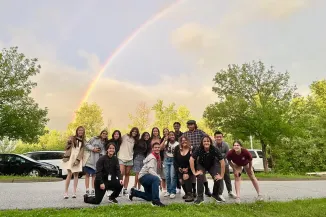
In summer 2023, the Columbia Climate School hosted the 2023 cohort of the Columbia Climate School in the Green Mountains program. The program, in partnership with Putney Student Travel, welcomed 65 students from around the world to Castleton, Vermont. The cohort represented 15 different states across the U.S., in addition to Puerto Rico, Canada, China, India and Turkey. Read more here!
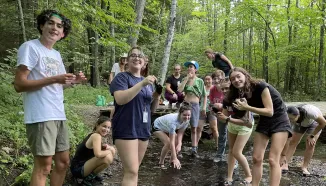
The annual Columbia Climate School in the Green Mountains program is designed for high school students hungry to drive positive impacts in their community in the face of climate change. During their time in the program, students network with experts from Columbia Climate School and learn about cutting-edge climate solutions and innovations in action. Learn more about our experts here!
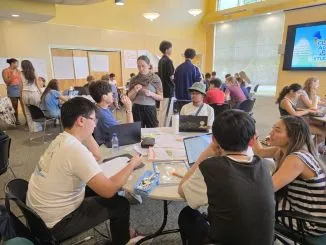
The Columbia Climate School in the Green Mountains provides transformative experiences by providing a breadth of climate and sustainability information and solution-based tools for passionate and activated students to drive holistic climate action. Three students share the knowledge they gained, the skills they developed and their personal experiences in our sustainability- and climate-focused program from summer 2022. Read more here!
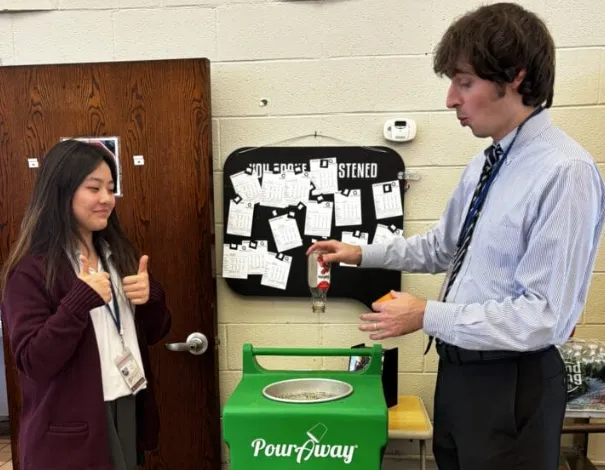
Alison Roh, an alumni from the Green Mountains Program left Vermont feeling inspired and empowered to make climate-friendly changes in her community. As a students at the Academy of the Holy Angels, she brought a liquid disposal bin to the Student Commons to facilitate recycling on campus. Read more here!
MAIN THEMES AND OUTCOMES
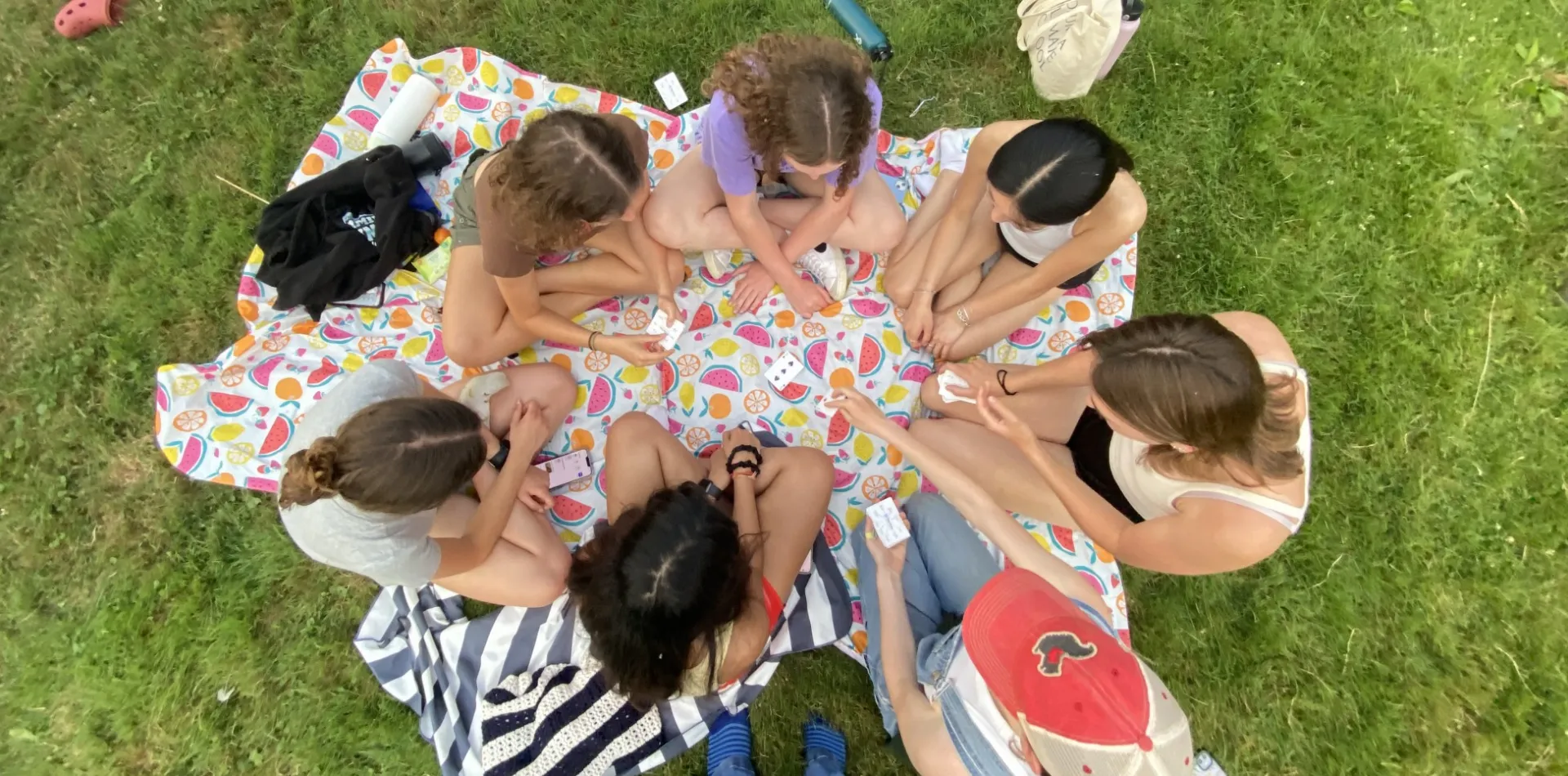
Join an empowering journey with the Columbia Climate School’s Green Mountains program—a dynamic, two-week experience designed to ignite your passion for climate action and sustainability. Led by world-class faculty and researchers, this program goes beyond traditional learning, immersing students in the diverse fields of climate science through interactive seminars, small group discussions, immersive field excursions, and collaborative projects.
Discover your unique role in addressing one of the most critical challenges of our time, sharpen essential skills like critical thinking and problem-solving, and gain the confidence to lead impactful change in your community. Connect with like-minded peers, build lasting friendships, and engage with cutting-edge insights from experts who are shaping the future of climate solutions.
Embrace this opportunity to be inspired, empowered, and prepared for the next steps in your academic and leadership journey—while becoming a catalyst for positive change in the world.
- Greenhouse Gas Effect and the Physics of Earth’s Temperature: Explaining how greenhouse gasses trap heat and regulate Earth's temperature, and an introduction to the basic physical principles (e.g., thermodynamics) that influence climate systems.
- Natural Variability vs. Anthropogenic Change: Understanding the difference between natural climate fluctuations and human-driven impacts.
- Climate Projections and Modeling: Using climate models to predict future climate scenarios and their potential outcomes.
- Global Processes: Examining worldwide patterns such as sea-level rise, glacial melt, and extreme weather events.
- Local Impacts: How climate change specifically affects local ecosystems, economies, and communities.
- Preparedness and Risk: Identifying vulnerabilities and planning proactive measures.
- Recovery and Planning: Strategies for post-impact recovery and future-proof planning.
- Mitigation and Adaptation: Implementing strategies to reduce emissions and adapt to unavoidable changes.
- Sustainable Development Goals (SDGs) and the Paris Agreement: Overview of key international frameworks aimed at curbing climate change.
- United Nations Climate Change Negotiations: Understanding the global dialogue and decision-making processes.
- Global Governance and International Law: The role of international legal systems in enforcing climate action.
- Monitoring and Measuring Progress: Tools and methodologies for tracking emissions reductions and energy transformation.
- Transition Strategies: Best practices for shifting from fossil fuels to renewable energy sources.
- Equity and Inclusivity: Ensuring fair treatment and meaningful involvement of all communities in climate policy.
- Disproportionate Impacts: Addressing how climate change disproportionately affects marginalized communities.
- Consumerism and Throwaway Culture: Examining the impact of consumption patterns and waste.
- Building a Value Chain: Creating sustainable supply chains that minimize waste and maximize resource efficiency.
- New Economic Models and Circular Systems: Transitioning from linear to circular economic practices.
- Achieving Sustainable Business Practices: Implementing methods for businesses to operate sustainably.
- Effective Messaging: Strategies for conveying climate information to different audiences.
- Public Engagement: Techniques for fostering open dialogue and action on climate issues.
- Understanding Current Ecosystem Conditions: Assessing present-day environmental data for climate monitoring.
- Collecting Climate Proxy Samples: Gathering data from tree rings to interpret past climate.
- Learning from Practitioners: Case studies and firsthand accounts from experts implementing sustainable practices.
- Applying Concepts: Translating theoretical knowledge into practical, real-world applications.
- Local Community Impacts: The role of local initiatives and grassroots movements in driving change.
- Strategic Communication: Planning and executing effective campaigns to inspire action.
- Youth Roles and Action: Empowering young people to become leaders and active participants in climate advocacy.
COLUMBIA CLIMATE SCHOOL EXPERTS
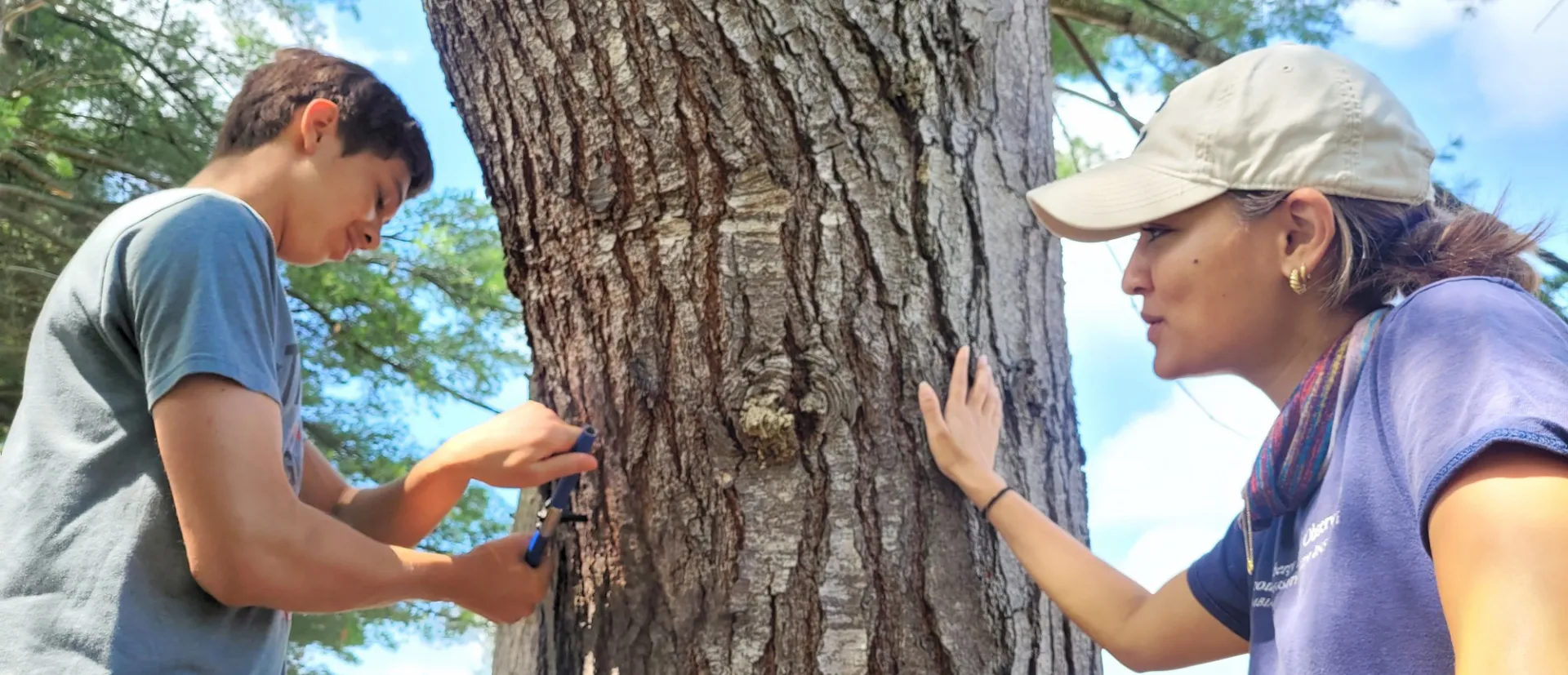
The Columbia Climate School in the Green Mountains program is led by faculty, staff, and researchers at the School who are experts in their field.
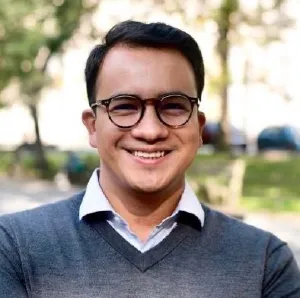
Josh DeVincenzo, Ed.D., is the Assistant Director for Education and Training at the National Center for Disaster Preparedness and an Adjunct Assistant Lecturer at Columbia Climate School. His focus is on developing learning experiences associated with national training projects that navigate housing and economic recovery. He has developed instructor-led and web-based curricula regarding financial literacy, economic impact analysis, and community partnerships. He has also developed courses for the Green Mountains program that empower young people to take climate action.
He holds a master’s degree in Education Policy, Organization, and Leadership from the University of Illinois at Urbana-Champaign and a doctorate from Columbia University's Teachers College with his dissertation on “Enhancing Capacity in Adult Climate Literacy: Investigating Sustainability Mindsets in the U.S. Emergency Management Profession.”
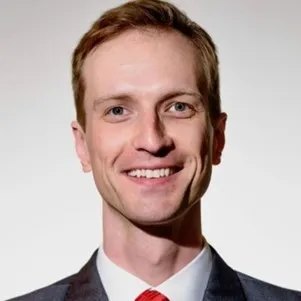
Martin Dietrich Brauch conducts economic and legal research, training, and advisory work at the Columbia Center on Sustainable Investment. He focuses on extractive industry investments in the context of sustainable development and the zero-carbon transition, and he leads the Center’s cross-cutting work on climate investment policy. His expertise also extends to investment law and policy, among other areas of international economic governance. He has worked extensively with developing countries, speaking English, French, Portuguese, and Spanish.
Prior to joining CCSI, he worked as international law advisor at a global think tank, in-house counsel at a media conglomerate, and associate attorney at a boutique law firm. As a graduate student, he undertook a legal internship at United Nations Climate Change. He received a B.A. in Economics, a Bachelor of Laws, and a specialization certificate in Environmental Law from the Federal University of Pelotas, Brazil. He holds an LL.M. in International Legal Studies from NYU School of Law, where he was an IILJ International Law Fellow.
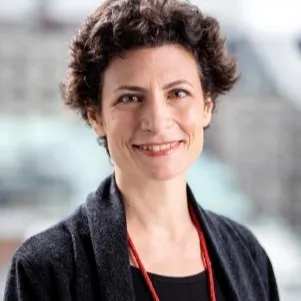
Sandra Goldmark is a designer and professor whose work focuses on the circular economy and interdisciplinary climate strategies. Sandra is the Director of Sustainability and Climate Action and an Associate Professor of Professional Practice at Barnard College, and Senior Assistant Dean for Interdisciplinary Engagement at the Columbia Climate School. Sandra teaches courses in sustainable design, circularity, and climate.
From 2013-2019, Sandra founded and operated Fixup, a social enterprise repair service dedicated to healthy and circular patterns of consumption. Sandra is a co-creator of the Sustainable Production Toolkit, a free climate action and sustainability resource for performing arts organizations, and serves on the Board of the Hudson Valley Shakespeare Festival. Her work has been featured in The New York Times, The Wall Street Journal, MSNBC, the BBC, The Sunday Times of London, The Daily News, Salon.com, and many more. A graduate of Harvard College and Yale University, Sandra is the author of Fixation: How to Have Stuff without Breaking the Planet.
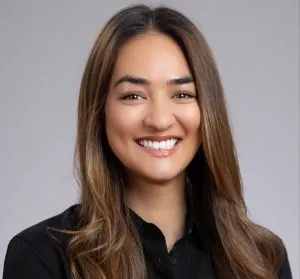
Laurel Zaima-Sheehy is the Assistant Director of K12 and Continuing Education at the Columbia Climate School. Laurel has substantial experience working with youth, teaching students through informal education about the natural environment through hands-on experiences. As an educator, Laurel works on education initiatives that communicate topics of sustainability, climate change, sea level rise, and climate action to the general public, K12 and undergraduate students, and formal and informal educators. Laurel has led and advised high school and undergraduate students through a variety of summer research opportunities including the Secondary School Field Research Program (SSFRP) and Next Generation of Hudson River Educators Program. Laurel has a BS in Marine Science and Biology from the University of Miami and a MS in Sustainability Science from Columbia University.
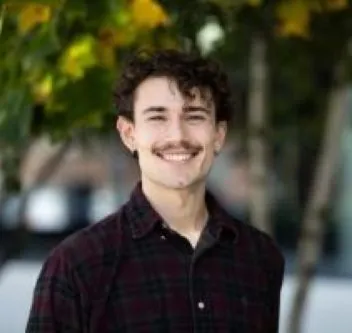
Ben Baraga supports the Center's research on investment governance, climate policy, and the energy transition. He received a BA in Public Policy Analysis and Environmental Analysis from Pomona College, researching drought, wildfire, and air pollution solutions for the greater Los Angeles area he grew up in. Reflecting his liberal arts schooling, Ben’s research since arriving in New York City has been deeply interdisciplinary: ranging from a critical minerals market assessment, to an SDG-based coffee handbook, to a report on emissions reduction for HVAC companies. Beyond research, his passion lies in teaching and mentorship, whether helping coordinate CCSI’s annual executive trainings or engaging with the Climate School’s K-12 offerings.
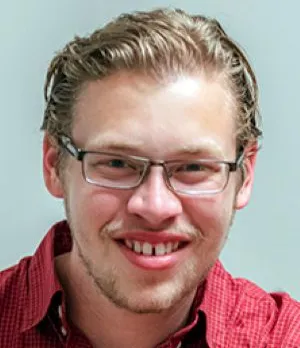
Alex Parsells is a Ph.D. candidate in Earth and Environmental Sciences at Columbia University. He is interested in why it rains when and where it does, particularly in the tropics, and with an emphasis on understanding the relationship between rainfall and energy transport by atmospheric circulations. His research focuses on the intense precipitation within the intertropical convergence zone, Western Hemisphere Warm Pool, and continental monsoons and their representation in reanalysis products and climate models. Alex has a B.S. in Astrophysics and a B.A. in Mathematics from the University of Oklahoma. He is also enthusiastic about science teaching and outreach and communicates principles of climate science to students and the public both in classroom environments and through the Climate Learning Lab at the American Museum of Natural History.

Aandishah Tehzeeb Samara is a PhD student in Earth and Environmental Sciences at Columbia University. Her research focuses on understanding shifts in the global hydroclimate and the complex interplay between anthropogenic climate change and natural variability. Born and raised in Dhaka, Bangladesh, Aandishah is deeply committed to climate justice. She is particularly focused on how marginalized communities are disproportionately affected by climate change. Her work highlights how a lack of hydroclimatic monitoring and data in these regions creates significant gaps in our global understanding and leaves these populations more vulnerable. Beyond her research, Aandishah is invested in teaching inclusive pedagogy and serves as a Senior Lead Teaching Fellow for the Center for Teaching and Learning (CTL), and drives student advocacy as the President for the Arts and Sciences Graduate Council (ASGC) President.
BECOME A PUTNEY STUDENT TRAVEL INSTRUCTOR
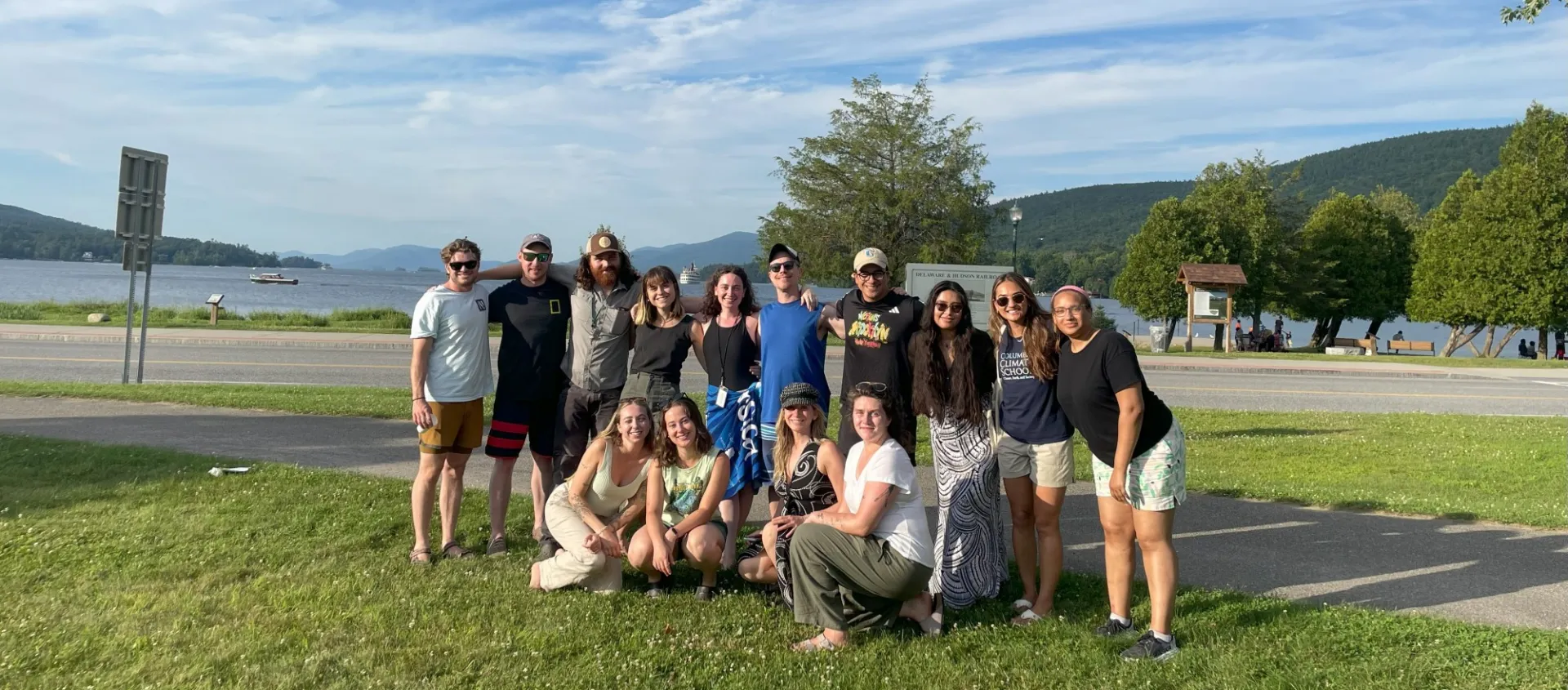
Experienced educators interested in teaching at the Columbia Climate School in the Green Mountains are invited to apply through Putney Student Travel. Please click below to read about our instructors, leadership requirements, and to begin the instructor application!
Sign up for our mailing list to receive updates about the Columbia Climate School in the Green Mountains.
QUESTIONS?
Have questions about the Columbia Climate School program content or faculty?
Email us at [email protected]
Have questions about the application process?
Call Putney Student Travel at 802-387-5000 or email us at [email protected]